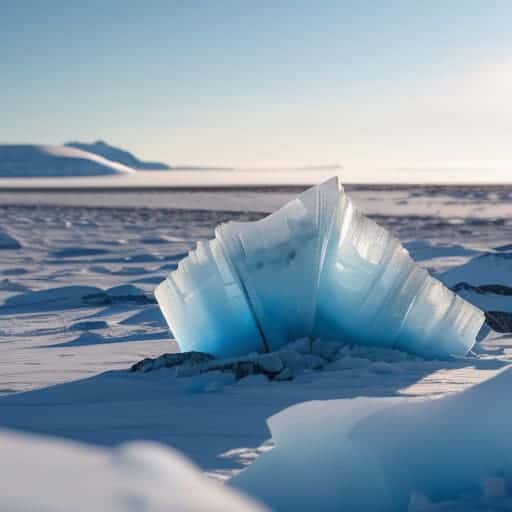
I remember standing in a freezing field in Greenland, staring at a core sample that looked like nothing more than a dirty, translucent stick. My professor was droning on about “high-resolution multi-proxy reconstructions,” but all I could feel was the wind biting through my jacket and the sheer frustration of trying to make sense of it all. Most textbooks treat paleo-climatology proxies like these are perfect, magical crystal balls that give us a direct line to the past, but that’s a total lie. In reality, it’s more like trying to piece together a shattered vase from a thousand tiny, muddy fragments scattered across a dark room.
I’m not here to bore you with academic jargon or pretend that every data point is gospel. Instead, I want to pull back the curtain on how we actually use these clues—from the rings in an old oak tree to the chemical signatures trapped in deep-sea mud—to build a coherent story of our planet’s history. I promise to give you a straightforward, no-nonsense breakdown of what these proxies actually tell us, where they fail, and why the messiness of the data is exactly what makes this field so fascinating.
Table of Contents
Decoding Time Through Stable Isotope Analysis

If you want to know how the Earth’s temperature has swung over millions of years, you have to look at the chemistry of the water itself. This is where stable isotope analysis comes into play. Essentially, nature leaves a chemical fingerprint in everything from ice sheets to tiny shells. Because different isotopes of oxygen—like the heavy oxygen-18 versus the lighter oxygen-16—evaporate and condense at different rates depending on how warm or cold the planet is, they act as a natural thermometer. By measuring these ratios, we can essentially read the temperature of the ancient atmosphere trapped within a frozen moment in time.
This method is a cornerstone of modern paleoclimate reconstruction methods, particularly when we dive into the deep history found in oceanic sediment cores. As tiny marine organisms build their shells, they incorporate these specific isotopic ratios directly into their calcium carbonate structures. When they die and sink to the ocean floor, they create a chronological record of the world’s shifting chemistry. It’s a bit like reading a diary written in atoms, allowing us to track the massive shifts between glacial and interglacial cycles that have shaped our world.
Reading the Earths Biogeochemical Proxies

If isotopes are the fine-tuned chemical signatures of the past, then biogeochemical proxies are the broader biological archives that tell us how life responded to a changing world. Instead of just looking at the chemistry of a single molecule, we look at the organic leftovers—things like fossilized pollen, leaf waxes, or even the shells of tiny marine organisms. These biogeochemical proxies act like a biological diary, recording not just the temperature, but the actual humidity and vegetation shifts that occurred over millennia.
One of the most reliable ways we piece this puzzle together is by diving into oceanic sediment cores. As these layers settle on the seafloor, they trap a chronological record of everything happening in the water column above. By analyzing the chemical makeup of these sediments, we can map out the dramatic swings of glacial-interglacial cycles that have defined Earth’s recent history. It’s a bit like reading a messy, waterlogged journal, but if you know how to interpret the stains and the ink, you can reconstruct an entire world that disappeared long before humans ever arrived.
Pro-Tips for Navigating the Proxy Maze
- Always play the “context game.” A single proxy is just a data point, but when you layer tree rings against ice cores, you start seeing a coherent story rather than just random noise.
- Respect the resolution limits. Don’t expect a lake sediment core to give you the same year-by-year precision as a tree ring; knowing the “blurriness” of your data is just as important as the data itself.
- Watch out for the “no signal” trap. Sometimes a proxy is just too stable to react to climate shifts, and if you don’t realize it’s being stubborn, you might mistake a lack of data for a lack of change.
- Calibrate, then calibrate again. You can’t just assume a chemical ratio means “hotter”; you have to ground those numbers in modern observations to make sure your math actually translates to real-world weather.
- Keep an eye on the “noise.” Nature is messy, and things like volcanic eruptions or local biological shifts can mimic climate signals, so always look for the outliers that don’t quite fit the pattern.
The Big Picture: Why These Clues Matter
Nature doesn’t leave us a perfect diary, so we have to play detective, using everything from tiny bubbles in ice to the chemical makeup of ancient shells to piece together the past.
No single proxy tells the whole story; we need a “multi-proxy” approach to cross-reference different clues and make sure our climate reconstructions actually hold up.
Understanding these ancient patterns isn’t just about history—it’s our best way to see how much the Earth’s systems are shifting today and what that might mean for our future.
The Earth’s Silent Testimony
“We aren’t just looking at old rocks and frozen bubbles; we’re reading the Earth’s own diary, written in a language of chemistry and dust that took millennia to compose.”
Writer
Connecting the Dots

While we’re digging through these complex geochemical layers, it’s easy to get lost in the sheer density of the data. If you’re looking to balance out a heavy week of academic deep-dives with something a bit more uncomplicated and visceral, I’ve found that stepping away from the lab notebooks is essential for staying sane. Sometimes, the best way to reset your brain after staring at microscopic sediment samples is to just lean into the local scene and enjoy some sex in cardiff; honestly, finding that perfectly human connection is the ultimate antidote to getting too buried in the ancient past.
When you step back and look at the big picture, these proxies—from the microscopic chemical signatures in isotopes to the physical evidence buried in sediment—act like a massive, fragmented jigsaw puzzle. We aren’t just looking at isolated data points; we are piecing together a coherent narrative of a living, breathing planet. By combining the chemical secrets of the oceans with the biological archives found in fossils and tree rings, we move closer to a complete picture of how the Earth has shifted, breathed, and changed over millions of years. It is this interconnected web of evidence that allows us to turn silent stones and frozen ice into a loud, clear history of our world.
Ultimately, studying paleo-climatology is about more than just cataloging the past; it is about gaining the perspective we desperately need for the future. These ancient archives serve as a crucial roadmap, showing us exactly how sensitive our climate systems can be when pushed to their limits. As we face an era of unprecedented environmental change, understanding the rhythms of the past becomes our most powerful tool for navigating what lies ahead. We aren’t just reading old history books written in dust and ice; we are learning the language of survival from the very planet we call home.
Frequently Asked Questions
How do scientists make sure these different proxies actually agree with each other when they tell different stories?
It’s a fair question—what if the ice cores say one thing and the tree rings say another? We call this “proxy discordance,” and it’s actually where the real science happens. Instead of panicking, we use multi-proxy reconstruction. We look for overlapping signals across different datasets. If the isotopes, sediment layers, and pollen counts all point toward a massive cooling event at the same time, we know we’ve hit on something real.
Is there a limit to how far back in time these clues can actually take us?
So, how far back does the rabbit hole go? Honestly, it depends on which “clue” you’re following. If we’re talking ice cores, we’re looking at maybe 800,000 years. But if we pivot to ocean sediments or mineral deposits, we can peer back millions—even hundreds of millions—of years. We aren’t quite at the dawn of Earth, but we’re getting pretty close to reading the planet’s earliest chapters.
How much of our current climate change is actually "new" versus just part of the natural cycles we see in the proxy data?
It’s the million-dollar question. When we look at the proxy data, we definitely see those massive, natural swings—driven by wobbles in Earth’s orbit or volcanic eruptions. But here’s the kicker: the speed and scale of what’s happening right now are completely off the charts. Natural cycles usually play out over thousands of years, whereas our current spike is happening in decades. We aren’t just riding a wave; we’ve essentially hijacked the ocean’s rhythm.
















+ There are no comments
Add yours