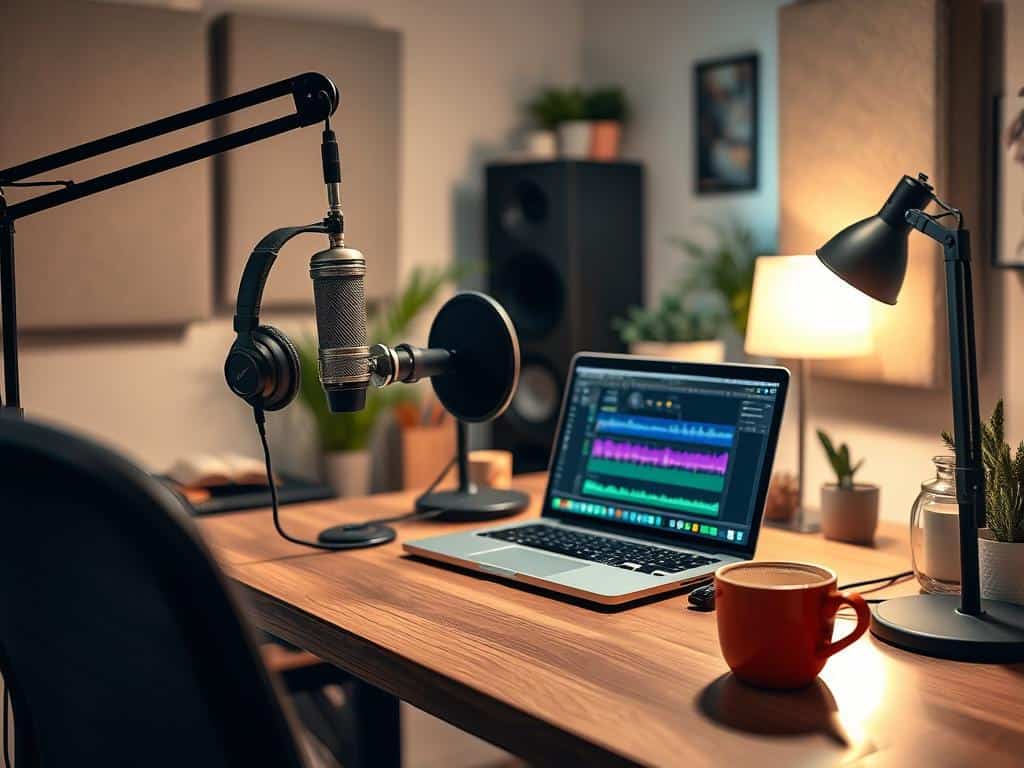
Did you know podcast listeners in the U.S. are expected to hit 100 million by 2024? This huge number shows how fast podcasting is growing. Starting a podcast in 2025 is a chance to reach many people who want new and interesting content.
This guide will help you start your podcast. We’ll cover everything from coming up with your idea to making your podcast. You’ll get all the tools and tips you need to succeed in this exciting field.
Let’s explore the world of podcasting together. We’ll look at what makes starting a podcast both possible and thrilling in 2025.
Key Takeaways
- Podcasting is rapidly growing, with listeners expected to rise to 100 million in the U.S. by 2024.
- Podcast listeners tend to engage deeply, with many tuning in to most episodes of their favorite shows.
- The advertising market for podcasts is projected to exceed $2 billion in 2023, providing avenues for creators to monetize.
- You can launch a podcast with minimal investment, often under $200, using basic equipment and free software.
- Consistency is key for keeping your audience; aim to publish regularly to keep listeners coming back.
The Basics of Podcasting
Podcasting is a world full of audio shows online. It’s like radio, but you can listen whenever you want. This makes it super convenient for listeners.
What is a Podcast?
A podcast is a digital space for audio content. Creators share their voices and stories on many topics. With over four million podcasts worldwide, there’s something for everyone.
Podcasts are easy to access. You can listen anytime, anywhere. This freedom is a big plus. Listeners love the realness and connection podcasts offer.
Even a small, dedicated group of 10,000 listeners is more valuable than a big, casual audience. This is true for popular podcasts. They have strong listener bases that support their voices in media.
Types of Podcasts
There are many podcast types to choose from. You can find solo shows, interviews, panel discussions, and stories. Long episodes let for deep conversations that radio can’t match.
While video podcasts are growing, most listeners prefer audio. They often listen on their smartphones. Anyone can make a podcast, from big-budget shows to free ones. This diversity makes podcasting rich and varied.
Starting a Podcast: Key Steps to Success
Starting a podcast needs careful planning and smart steps. The first step is developing a podcast concept. This is the base of your podcast. It’s key to think about every detail to connect with your audience.
Developing a Podcast Concept
The first step is to turn your idea into a strong podcast concept. A good concept draws in listeners and keeps them coming back. It’s important to pick unique topics to stand out in a crowded market with over 2 million podcasts.
Define Your Podcast’s Purpose
Once you have your concept, think about your podcast’s purpose. Knowing why you’re making it helps shape the content and feel. With 75% of listeners wanting more, a clear purpose keeps them listening.
Crafting a Unique Angle
Podcasting is competitive, so finding a unique podcast angle is essential. Using the PATH framework helps define your show’s special traits. Knowing your audience’s likes lets you create standout episodes that last.

Planning and Production Techniques
Planning podcast episodes well is key to a smooth process and great content. A clear outline makes the podcast better, keeping listeners hooked. Choosing the right equipment is also important to improve the recording quality.
Outlining Your Episodes
Creating a detailed outline for episodes is helpful. Write down main topics and subtopics for deeper discussions. This avoids awkward pauses and covers all important points.
Try to keep episodes between 20-60 minutes long. Most listeners enjoy this length, keeping them engaged.
Choosing the Right Equipment
Choosing the right podcast equipment is vital. Start with a good USB microphone, like the Samson Q2U, which costs about $70. For better quality, consider an XLR setup.
The Shure SM7B is a top choice, priced at $400, for its excellent sound. Don’t forget to get boom arms, shock mounts, and pop filters to improve audio quality.
Recording and Editing Your Episodes
Good recording techniques are essential. Make sure your recording space is quiet and well-prepared. Focus on microphone placement and soundproofing if needed.
Editing is the next step. Use software like Audacity or GarageBand to clean up the audio. For a better remote recording experience, check out Riverside.fm or SquadCast.
Conclusion
As we finish this podcasting guide, let’s think about starting a podcast and how to succeed. From coming up with your idea to making sure your production is top-notch, every step is important. Remember, being dedicated and passionate is key when you share your voice with the world.
With over 155 million podcast listeners in the U.S., you have a big chance to reach many people. It’s also important to know who your audience is. Research shows that over 60% of new podcasters struggle to find their target audience at first.
Being able to adapt and learn from your experiences is a big part of building a loyal fan base. Formats like storytelling and interviews can really help keep listeners interested. This shows that trying different things can help keep your audience coming back.
In the end, podcasting is all about connecting with others. Reaching out to other podcasters and sharing your journey can give you great advice and support. Keep trying new things with your content and don’t be afraid to make money as your podcast grows. With the right approach, the world of podcasting is yours to discover.















+ There are no comments
Add yours