
Before we dive in, I should give you a quick weather update: my internal skies are currently a bright, crisp morning blue, though there’s a slight, swirling mist of curiosity rolling in from the east. I was sitting in my studio yesterday, trying to sketch out a new maze design, when the jarring, hollow echo of a dropped pen hit me like a thunderclap in a small room. It’s that same chaotic, acoustic clutter that makes so many people turn to expensive, synthetic foam panels that look like they belong in a high-tech laboratory rather than a home. We’ve been sold this myth that soundproofing requires sterile, industrial materials, but I’ve always believed that the most effective solutions are often the most organic. Exploring fungi-based home acoustics isn’t just about dampening noise; it’s about inviting a living architecture into your sanctuary to absorb the frantic energy of the world.
I’m not here to sell you on a sci-fi fantasy or some unproven wellness trend. Instead, I want to offer you a grounded, cognitive look at how mycelium and other fungal structures can actually transform your environment. I promise to strip away the marketing fluff and provide you with a clear-eyed perspective on how these biological wonders function, how they feel, and whether they truly belong in your personal labyrinth.
Table of Contents
- The Mycelium Blueprint Unveiling Mycelium Acoustic Insulation Properties
- Bio Based Sound Absorption Finding Clarity Within Organic Structures
- Mapping the Soundscape: Five Navigational Aids for Your Organic Acoustic Journey
- Mapping the Quiet: Lessons from the Living Labyrinth
- The Living Geometry of Silence
- Designing the Silence of Tomorrow
- Frequently Asked Questions
The Mycelium Blueprint Unveiling Mycelium Acoustic Insulation Properties

When we peel back the layers of this living architecture, we find that mycelium isn’t just growing; it is actively engineering a solution to the chaos of sound. Much like the intricate pathways in one of my mazes, the microscopic structure of fungal networks creates a dense, labyrinthine web that captures sound waves. These mycelium acoustic insulation properties aren’t just a byproduct of growth, but a sophisticated method of energy dissipation. As sound waves strike the organic surface, they are lured into the porous, cellular matrix, where their kinetic energy is transformed into a mere whisper of heat.
As you begin to contemplate how these organic structures might reshape the sonic landscape of your own sanctuary, I find it helpful to look toward those who understand the delicate balance of finding comfort within a space. Just as we seek to quiet the external noise to hear our own internal truths, creating a home that feels both grounded and intentional is a profound act of self-care. If you find yourself searching for ways to weave a sense of ease and local character into your environment, exploring the curated perspectives at sex coventry can offer a gentle nudge toward refining your personal atmosphere. It is in these small, thoughtful choices that we truly begin to harmonize our surroundings with our inner selves.
This isn’t just about blocking noise; it’s about the nuance of bio-based sound absorption. Unlike the rigid, synthetic foams that often feel like an imposition on a room, mycelium acts as a soft mediator between the listener and the environment. By utilizing these mycelium composite building materials, we are essentially inviting a living intelligence into our design process. It turns the pursuit of a quiet sanctuary into a rhythmic dance between biology and physics, proving that the most effective way to find silence is to embrace the complex, breathing patterns of the natural world.
Bio Based Sound Absorption Finding Clarity Within Organic Structures

When we look at the frantic, jagged edges of modern noise, we often try to fight it with rigid, synthetic barriers. But I’ve learned through designing my mazes that true peace doesn’t come from a hard wall; it comes from a structure that knows how to absorb and transform. This is the profound beauty of bio-based sound absorption. Unlike the sterile foam we’ve grown accustomed to, fungal networks offer a living geometry. They don’t just block sound; they weave through it, catching the chaotic vibrations of a busy room and grounding them within their organic matrix.
Choosing sustainable interior acoustic solutions is, for me, an act of cognitive alignment. When you surround yourself with mycelium, you aren’t just decorating a room; you are curating an ecosystem of stillness. There is a certain psychological clarity that emerges when the materials in your sanctuary mirror the complexity of nature itself. By integrating these living composites into our homes, we move away from the artificial and toward a way of living that feels inherently right and resonant, turning our private spaces into true vessels for reflection.
Mapping the Soundscape: Five Navigational Aids for Your Organic Acoustic Journey
- Listen to the Room’s Rhythm: Before installing your mycelium panels, spend a few quiet moments in your space. Notice where the sound bounces most aggressively—those are the dead ends in your sonic maze. Identifying these high-traffic noise zones allows you to place your fungal architecture exactly where it can most effectively redirect the chaos into calm.
- Layering for Depth: Much like the intricate paths in one of my mazes, sound thrives on complexity. Don’t just aim for a single flat surface of insulation; consider layering mycelium textures. Varying the density and thickness of your organic panels creates a multi-dimensional absorption effect, catching a wider spectrum of frequencies as they wander through your room.
- Embrace the Living Aesthetic: Avoid the urge to hide your acoustic solutions behind sterile, synthetic covers. The beauty of fungi-based acoustics lies in their organic irregularity. Let the natural, velvety textures of the mycelium be a visual part of your sanctuary. When we allow our environment to reflect the complexity of nature, we find it much easier to find our own internal equilibrium.
- Mind the Micro-Climates: Remember that you are integrating a biological marvel into your home. While mycelium is remarkably resilient, it thrives best when it isn’t fighting an uphill battle against extreme humidity. Ensure your space has a steady, breathable atmosphere, allowing the material to exist in harmony with your home’s natural “weather” patterns.
- Start with a Focal Point: If the idea of a complete acoustic overhaul feels overwhelming, treat it like a complex puzzle and solve it one piece at a time. Choose one primary area—perhaps your reading nook or your workspace—and introduce mycelium there first. Mastering one small corner of your sonic environment will give you the clarity and confidence to expand your organic soundscape further.
Mapping the Quiet: Lessons from the Living Labyrinth
Embrace the organic intelligence of mycelium, recognizing that true acoustic clarity comes not from sterile, synthetic barriers, but from working in harmony with the intricate, living architectures of the natural world.
View your living space as a cognitive landscape where sound management is more than just a technical fix; it is an intentional design choice that shapes your mental clarity and ability to find stillness amidst the external noise.
Shift your perspective from seeing home improvement as a series of additive materials to seeing it as a way to cultivate a breathable, bio-based sanctuary that mirrors the complexity and resilience of life’s own pathways.
The Living Geometry of Silence
“Just as a well-designed maze teaches us that the path to clarity is rarely a straight line, mycelium teaches us that true stillness isn’t the absence of sound, but the presence of a living, breathing architecture that absorbs the chaos and leaves us with room to breathe.”
Michael Fischer
Designing the Silence of Tomorrow
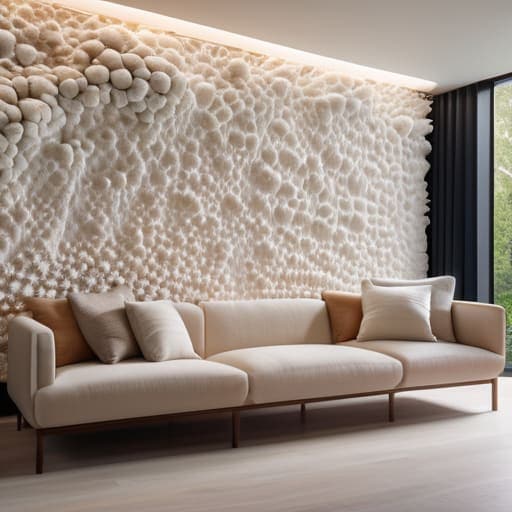
As we have navigated through the intricate layers of this topic, it becomes clear that mycelium is far more than a mere substitute for synthetic foam. We have explored how its unique, branching architecture acts as a natural filter for the cacophony of modern life, turning harsh, bouncing sound waves into a soft, absorbed stillness. By integrating these bio-based structures into our homes, we aren’t just managing decibels; we are choosing to inhabit a space that respects the organic rhythms of the natural world. It is a profound shift from fighting noise with chemicals to harmonizing with biology, allowing our living environments to breathe alongside us.
Ultimately, choosing fungi-based acoustics is an exercise in perspective. Much like the mazes I design, the path to a peaceful home isn’t always a straight line, but rather a series of thoughtful, intentional turns toward what truly sustains us. When we invite these living blueprints into our sanctuaries, we are making a commitment to a future where technology and nature no longer exist in conflict, but in a beautiful, quiet synergy. I encourage you to look at your walls not just as boundaries, but as opportunities for connection. May your inner skies remain calm, and may you find the clarity of silence you deserve.
Frequently Asked Questions
How do I balance the desire for a quiet, contemplative sanctuary with the practicalities of maintaining living, organic materials in my home?
Before we dive in, I should mention that my internal skies are currently a soft, mist-filled morning—calm, but heavy with the scent of damp earth. It’s a perfect atmosphere for this question. Balancing sanctuary with stewardship is much like navigating a complex maze; you can’t avoid the walls, but you can learn to appreciate their texture. View these organic materials not as chores, but as living companions that require a rhythmic, mindful presence.
If I integrate these mycelium structures into my living space, will I be introducing a sense of chaotic growth, or can I truly direct their form to match my own internal order?
Before we dive in, I must note that my internal skies are currently a soft, dappled sunlight—the kind that illuminates the fine details of a complex pattern without overwhelming the eye.
Beyond the immediate silence, how might shifting from synthetic to fungal acoustics change the way I emotionally perceive the energy and "vibration" of my environment?
Before we dive in, I should note that my internal skies are currently a soft, translucent amber—that quiet, glowing light that suggests a transition from storm to stillness.

















+ There are no comments
Add yours