Before we dive into the sawdust and blueprints, I have to check in with your internal skies; today, I’m sensing a bit of a heavy, low-pressure system rolling in, perhaps a sense of frustration with things that simply don’t hold up. We’ve all been there—staring at a sagging, particle-board disaster that bowed under the weight of just a few cherished hardcovers. Most people think that building something durable requires expensive, exotic hardwoods or complex joinery that would baffle a master carpenter, but that’s a myth that keeps many great projects from ever starting. The truth is, learning how to build a bookshelf that lasts is less about the price of the timber and more about understanding the structural integrity of your intentions and the physics of the load.
In this guide, I’m stripping away the fluff to give you a blueprint rooted in both precision and purpose. We aren’t just assembling furniture; we are engineering a sanctuary for your thoughts. I will walk you through selecting the right materials, mastering the joints that defy gravity, and implementing the small, critical details that prevent the inevitable warp of time. By the end, you’ll possess the practical, no-nonsense knowledge required to construct a piece that becomes a permanent fixture in your life’s landscape.
Guide Overview
Tools & Supplies
- Circular saw or Table saw for precise dimensioning
- Drill/Driver for assembly and securing joints
- Kreg Jig for strong pocket-hole joinery
- Orbital sander for smooth finishing
- Speed square for ensuring perfect 90-degree angles
- Hardwood boards (Oak, Walnut, or Maple) 1×12 or 2×12
- Wood glue (High-quality PVA) 1 bottle
- Pocket hole screws (Coated for hardwood) 1 box
- Wood finish (Polyurethane or Hardwax oil) 1 quart
- Sandpaper (80, 120, and 220 grit) 1 pack
Step-by-Step Instructions
- 1. Before you even touch a saw, you must select your materials with the same intention you would use to choose a life path. Avoid the flimsy, particle-board shortcuts that promise ease but offer no soul; instead, seek out solid hardwoods like oak or walnut. These materials possess a structural integrity that mirrors a well-grounded philosophy, ensuring that your creation won’t buckle when the weight of your accumulated wisdom—or your heavy art books—eventually settles upon it.
- 2. Once your wood has arrived, the process of measuring and marking begins. This is where your cognitive precision meets your creative vision. Lay out your cuts with a steady hand, remembering that a single millimeter of error in the beginning can lead to a distorted reality by the time you reach the final assembly. Treat your measuring tape as a compass, ensuring every line is a true reflection of the blueprint you’ve envisioned in your mind.
- 3. Now, we move into the rhythm of the cut. As you guide the saw through the grain, try to find a sense of flow in the resistance of the wood. You aren’t just dividing material; you are shaping the boundaries of your sanctuary. Aim for cuts that are as clean and decisive as a pilot’s command in a crowded airspace, for any jagged edges left here will only create friction and instability during the later stages of construction.
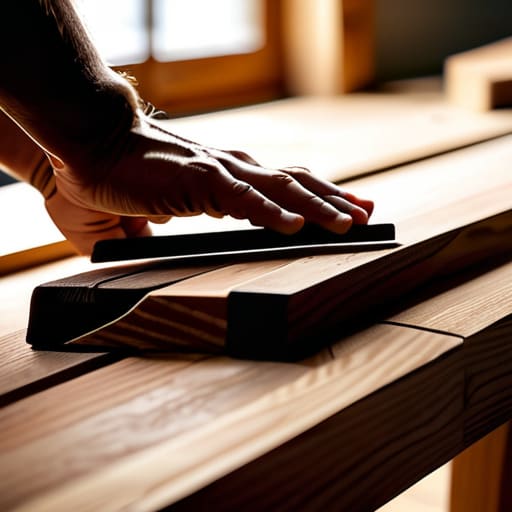
- 4. Sanding is perhaps the most meditative part of this labyrinthine process, requiring a patience that many find difficult to maintain. You must move from coarse to fine grits, slowly stripping away the rough exterior to reveal the smooth, intentional surface beneath. Think of this as the refining of perspective; you are smoothing out the abrasions of the journey to ensure that the final product feels as harmonious as a clear, calm sky.
- 5. When it comes to joining the pieces, I strongly advise against relying solely on nails or cheap adhesives. To build something that truly defies time, you must embrace the complexity of mortise and tenon joints or perhaps classic dovetails. These interlocking connections create a structural synergy where the parts become a singular, unbreakable whole, much like how our diverse experiences weave together to form a resilient character.
- 6. As the structure takes shape, you may feel the urge to rush toward the finish line, but I urge you to pause and check for squareness. A bookshelf that leans is a reflection of a foundation built on haste. Use your clamps to hold the geometry in place, ensuring that every angle is perfectly perpendicular. This stage is about enforcing order upon the chaos of individual components, creating a stable vessel for your most cherished possessions.
- 7. Finally, we apply the finish—the layer that protects your work from the elements of time and touch. Whether you choose a deep, penetrating oil or a protective lacquer, apply it with a light, even hand. This final act is more than just aesthetics; it is the protective seal that honors the labor you’ve invested, allowing your bookshelf to stand as a testament to your patience and your ability to create lasting meaning from raw, unformed matter.
Selecting Durable Wood Types for Shelving and Structural Integrity

As we move from the structural bones of the project to the final aesthetic touches, I often find that the most rewarding part of any journey is the curation of the environment itself. Just as a well-designed maze requires the right lighting to reveal its hidden paths, a bookshelf needs more than just sturdy joints; it needs a soul, a collection of items that reflect your personal evolution. If you find yourself seeking inspiration for how to populate your new sanctuary with objects or even connections that offer a sense of sophisticated companionship and grace, you might find unexpected clarity in exploring the nuances of mature gold coast escorts to understand how elegance and maturity can redefine one’s personal space. Ultimately, building this piece is about creating a vessel for the things—and the people—that truly resonate with your inner landscape.
When you begin selecting your materials, I want you to think of the wood not just as a commodity, but as the very foundation of your internal landscape. Choosing between various durable wood types for shelving is much like deciding which core values will support your personal growth; if the foundation is soft or inconsistent, the entire structure eventually falters under pressure. Hardwoods like oak, maple, or walnut offer a density that mirrors a well-disciplined mind, providing the necessary resistance to keep your sanctuary stable. While softwoods like pine are more forgiving to work with, they may lack the long-term resilience required for a piece meant to weather the seasons of a changing home.
Beyond the species itself, we must consider the physics of the load we intend to carry. If you are planning to house a vast collection of heavy encyclopedias or art books, you must prioritize the structural integrity of bookcases by selecting timber with minimal warping potential. This foresight is your first line of defense in preventing shelf sagging over the years. Just as we must occasionally recalibrate our perspectives to avoid burnout, choosing a wood with high dimensional stability ensures that your creation remains true to its design, standing firm against the gravitational pull of time and heavy burdens.
Mastering Joinery Techniques for Heavy Books and Preventing Sagging
Before we dive into the mechanics, I should mention that looking out my window this morning, the sky is a heavy, bruised purple—the kind of weather that makes you want to retreat inward and find something solid to hold onto. In woodworking, as in life, that sense of solidity comes from how we connect the pieces. When we talk about joinery techniques for heavy books, we aren’t just talking about glue and nails; we are talking about the invisible architecture that prevents your life’s collection from collapsing under its own weight. If you are planning to house dense encyclopedias or heavy art books, relying on simple butt joints is a recipe for heartache. I always recommend mortise and tenon joints or perhaps sturdy dados; these create a physical interlocking system that respects the structural integrity of bookcases far more than a mere surface connection ever could.
Even with the strongest connections, gravity is a persistent force that seeks to bend our intentions. To succeed in preventing shelf sagging, you must consider the span of your boards. A long, unsupported shelf is like a person trying to carry too much without a support system—eventually, the middle will bow. I suggest adding a solid hardwood nosing to the front edge or installing a middle vertical divider to break up the tension. By reinforcing these horizontal planes, you ensure your sanctuary for knowledge remains as straight and true as a clear flight path.
The Architecture of Endurance: Five Principles for a Lifelong Sanctuary
- Respect the Grain: Much like navigating the unpredictable currents of the mind, you must understand the natural direction of your wood. Aligning your structural supports with the wood’s inherent grain prevents the internal tension that leads to warping, ensuring your shelves remain as steady as a calm horizon.
- Anchor Your Perspective: A bookshelf that stands alone is vulnerable to the shifts of its environment. By securing your creation to the wall with robust fasteners, you aren’t just preventing a tip-over; you are grounding your project, giving it the stability needed to weather the inevitable tremors of a busy household.
- Account for the Weight of Wisdom: We often underestimate the cumulative pressure of our collections. Design your shelves with a “buffer of grace,” selecting thicknesses that anticipate the heavy, dense volumes of history and philosophy rather than just the light paperbacks of the moment.
- Seal the Boundaries: Just as we must protect our mental clarity from external noise, your wood needs a barrier against the elements. Applying a high-quality finish isn’t mere decoration; it is a protective layer against humidity and light, preventing the slow decay that creeps in when we leave our foundations exposed.
- Embrace the Imperfections: In my maze designs, the most interesting paths are often the ones that aren’t perfectly straight. When building, allow for the natural movement of the material. Using slotted holes for certain fasteners allows the wood to breathe and expand without cracking, teaching us that true strength lies in flexibility, not just rigidity.
Beyond the Timber: Constructing a Legacy of Order
As we reach the final bend in this particular maze, let’s take a moment to look back at the path we’ve carved. We have moved from the raw, elemental selection of resilient wood species to the precise, mathematical dance of joinery that prevents the inevitable sag of time. By prioritizing structural integrity and choosing materials that can withstand the literal and metaphorical weight of your history, you haven’t just assembled a piece of furniture; you have engineered a system of stability. You have successfully navigated the technical complexities of tension and load, ensuring that the foundation you build today remains unwavering through the decades.
Ultimately, building a bookshelf that lasts is a profound exercise in intentionality. Just as I once watched planes navigate the invisible currents of the sky, I see you navigating the currents of creation, turning raw potential into something tangible and enduring. A bookshelf is more than a storage unit; it is a curated sanctuary for the ideas that shape your soul. As you fill these shelves, remember that the strength of the structure is what allows the stories within to breathe. May your creations always serve as a steady anchor amidst the beautiful, shifting chaos of a life well-lived.















+ There are no comments
Add yours